


The “Holey” Bowl
Apr 2, 2026
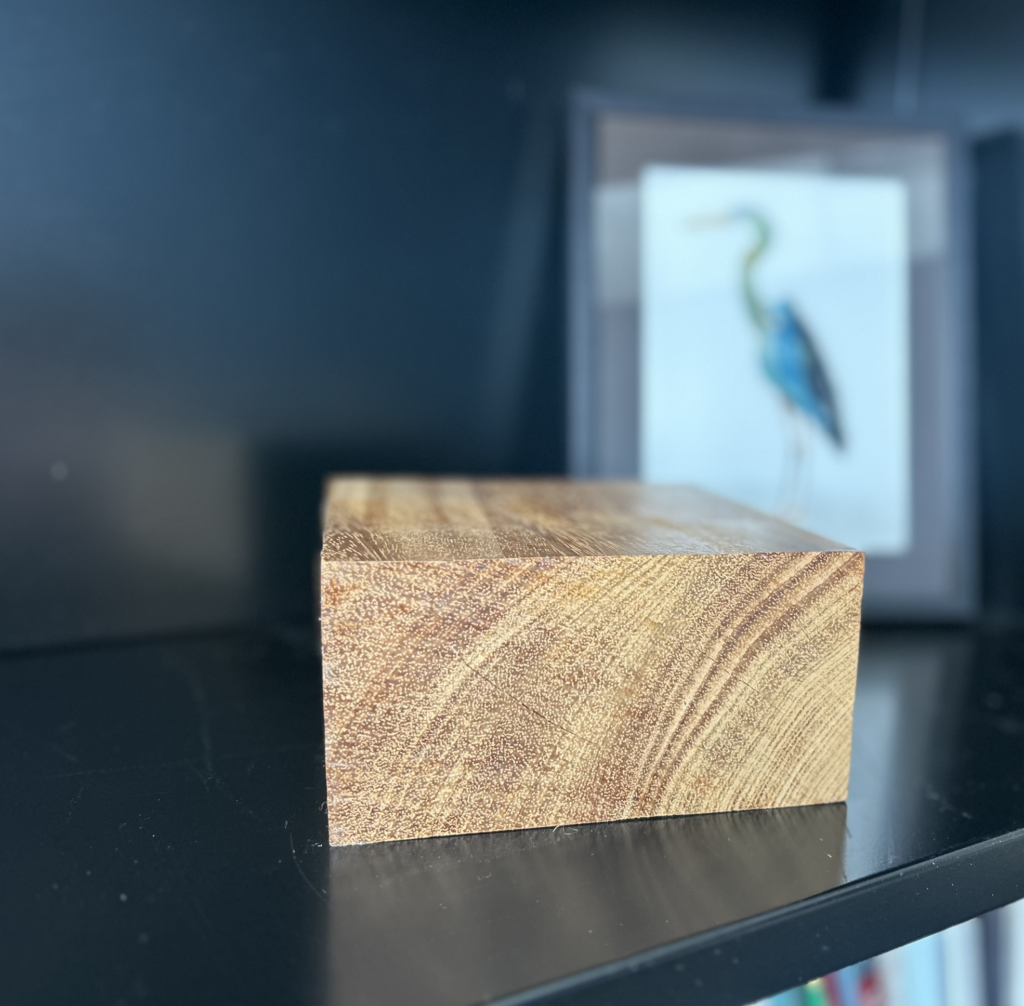
Imagine that in front of you sits a block of beautiful wood.
It is solid with smooth sides and sharp corners. In its current form, it is complete. It can serve many purposes: a doorstop, a paperweight, something to elevate another object, a step to reach what is just out of reach, or simply a piece of art resting on a shelf. There is a quiet beauty in its natural state. It holds potential without pressure. It is whole in its current form.
Can it become something different?
The moment you decide to begin cutting into it and carving it, everything changes. You must remove pieces of what once was. It can transform into many different objects, and it is no longer the pure, simplistic block. It will never again be what it once was.
Years ago, I thought that I might want to invest in a lathe and learn the craft of woodturning. I began with a full-day introductory class, where we were taught how to use the tools and safely shape the wood. By the end of the day, I had created a spindle with a series of curves along its length. I remember feeling proud of what it represented. It had started as a simple block of wood and had become something entirely different. It no longer had its original block form, yet it carried evidence of the process that shaped it, something I, the lathe, and tools were a part of at that moment.
Encouraged by that experience, I enrolled in another class. This time the class focused on creating a wooden bowl. I arrived with anticipation, curious about what would emerge from the next block I would choose.
After reviewing safety procedures, we were invited to select from a collection of wood blocks with each piece holding its own character and possibility. I chose my block and secured it onto the lathe.
With guidance from the instructor, I began the process: cutting, shaping, adjusting, learning how each tool influenced both the form and function of the bowl. Around me, wood shavings flew as others shaped their own creations, each of us gradually transforming something solid into something intentional.
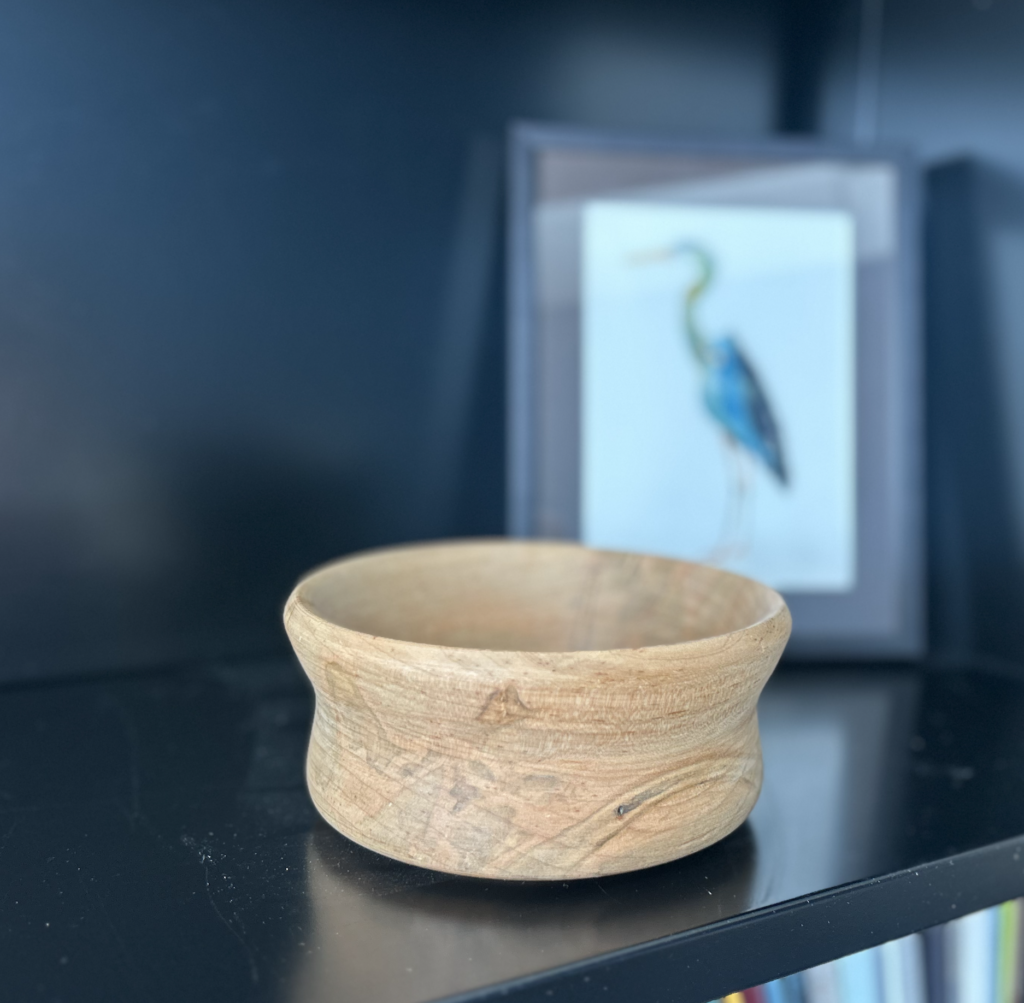
As my bowl began to take shape, I found myself thinking about its purpose. A bowl is inherently useful. It can hold keys, coins, sunglasses, or small objects gathered over time. It can collect what matters. It can also stand alone as a piece of art. It is both functional and symbolic.
Eventually, my bowl began to feel complete.
The shape was right. The edges were smooth. It felt finished.
My instructor approached and offered encouragement. I told him, “I think it is done.”
As I worked on smoothing the bottom, he paused and said, “I think you can go a little further.”
I hesitated.
“Trust me,” he said. “You can go further.”
So I did.
I applied a bit more pressure, guiding the tool into the base of the bowl. The sound shifted. I heard a higher, thinner tone, almost as if the bowl itself was signaling something had changed. It was singing.
In that moment, I knew that it was getting too close to being finished, but I continued.
Seconds later, the bottom of the bowl gave way.
What remained was a perfectly symmetrical, beautifully smooth hole in the bottom of what had almost been a finished bowl.
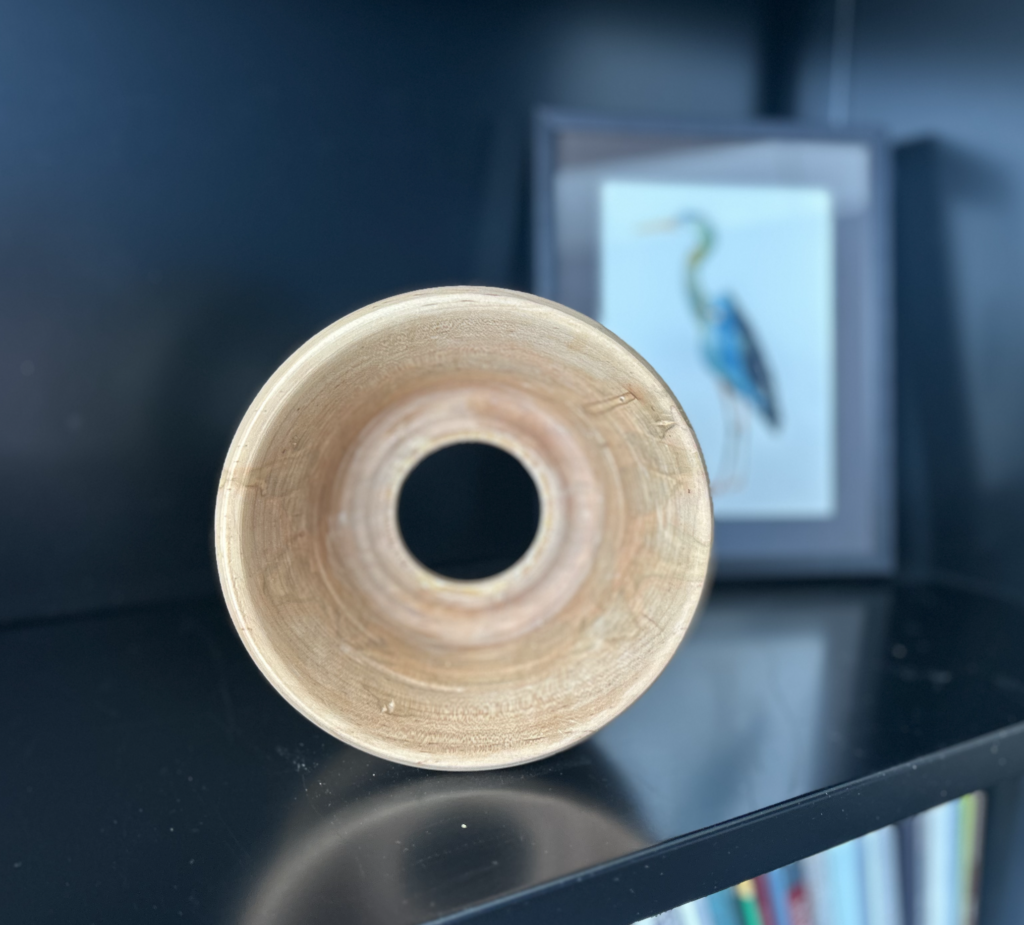
What does this “holey bowl” represent?
It represents the tension between creation and excess. Between refinement and overextension. It represents the moment when pushing just a little further becomes pushing too far.
It is a reminder of what happens when we do not fully trust our own instincts.
Have we listened to the subtle cues, the internal signals that tell us something is complete?
It reflects the complexity of trusting external guidance, especially when that guidance is not rooted in the same proximity to the work, the context, or the care that shaped it.
And yet, even in its imperfection, the bowl remains mine, and I display it with joy.
It is still a product of intention, effort, and learning. It is still, in its own way, beautiful. And perhaps most importantly, it carries a lesson that a perfectly finished bowl may not have taught as clearly.
Where, then, is the balance between:
The untouched block (full of possibility),
The finished bowl (shaped with purpose), and.
The holey bowl (altered by going too far).
This balance and metaphor extends beyond woodturning.
What, in your own work or other parts of your life, have you taken too far?
Where are you pushing yourself or others beyond the point of completion or being done?
How do you recognize the moment when something is done or finished?
And which signals in your gut, your heart, and your head are asking you to stop?
Whole block.
Whole bowl.
Holey bowl.
Leave a Reply
Join the ED Nook List!
Sign up and get the latest blog posts, news, and more from ED Nook!
Contact Us
Reach out with any questions or requests for executive coaching or leadership consulting quotes here. We look forward to connecting with you!
Thanks! We received your message and will get in touch soon!


