

The Silkworm and the Single Thread: A Lesson from Ephesus to Kuşadasi
Oct 4, 2026
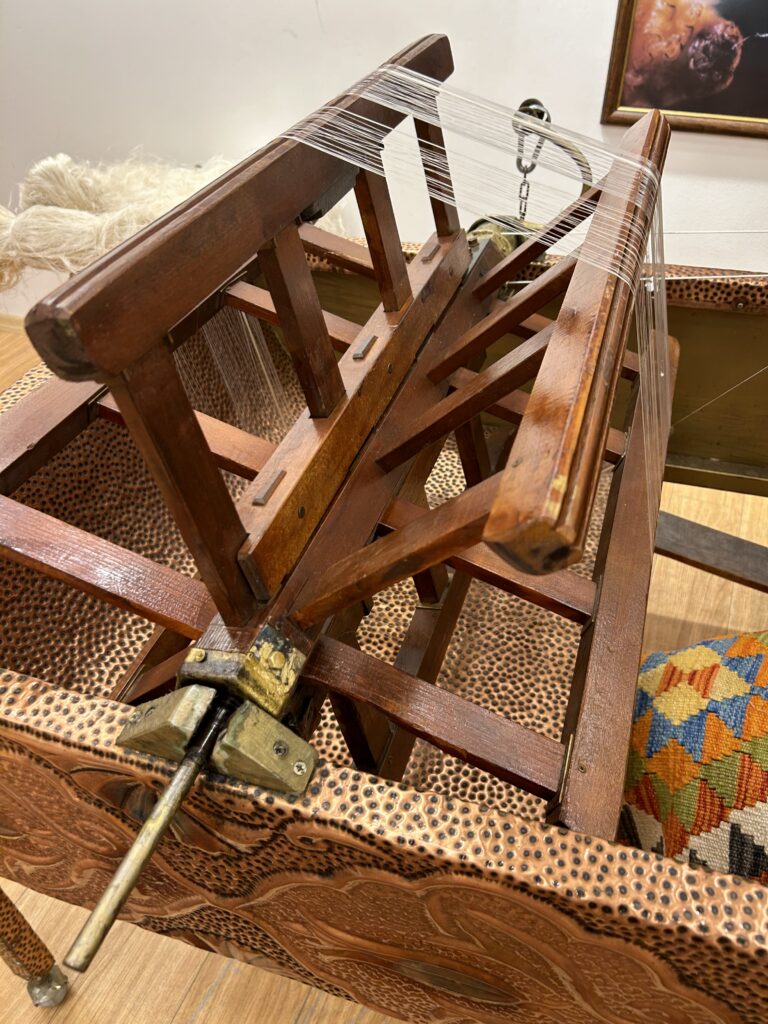
A few years ago, I had the chance to island-hop through the Aegean Sea on a small sailing vessel. It was one of those trips where history stops feeling like something you read about and starts feeling like something you are standing inside. Every port had a story. But the port of Kuşadasi, on Turkey’s western coast, gave me two of the most memorable moments of the whole voyage, which includes, oddly enough, a lesson about leadership and teams that I still carry with me.

A Hillside House and an Ancient City
The morning after we docked, our group scattered. Some to the beach, some to the shops, and a handful of us onto a tour bus headed up into the hills above the coast. Our first stop was the House of Mary, a small stone chapel that tradition holds was Mary’s home after she was exiled to the region following the crucifixion of her son, Jesus. There, she was cared for by the Apostle John. It is a quiet, humble place, easy to miss, and, all the more, moving because of it.
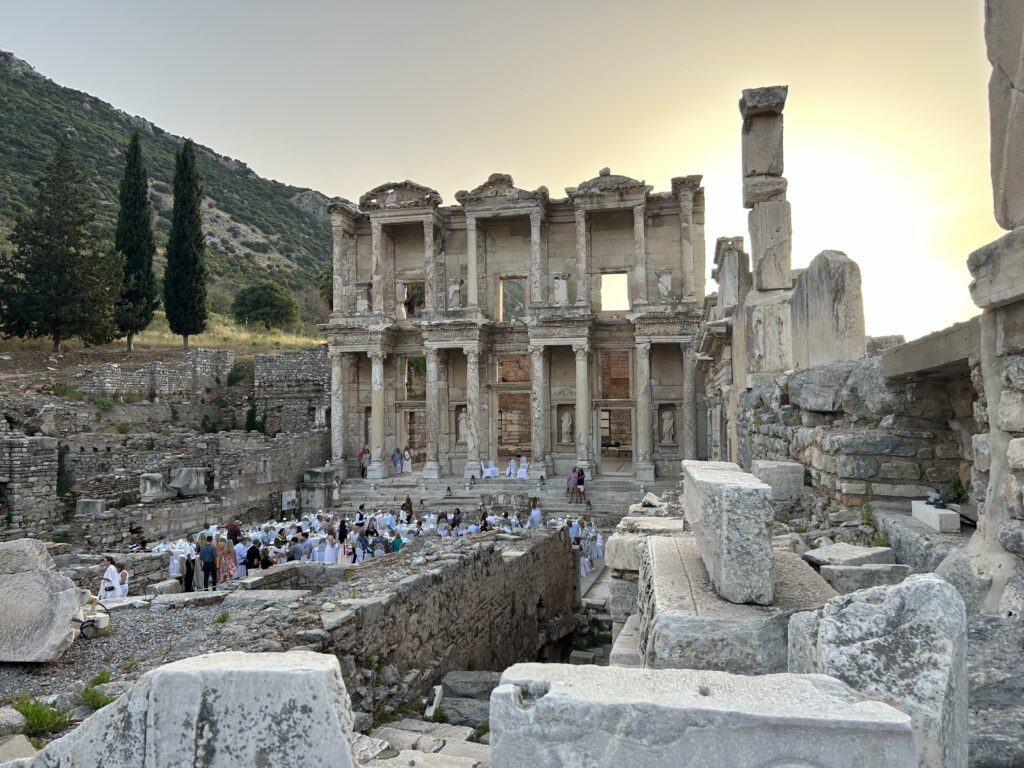
From there, the bus wound back down into the valley to the ancient city of Ephesus itself. Ephesus was already an old Greek port city by the time the Romans expanded it into one of the great cities of the ancient Mediterranean. We were told that this was the city that Cleopatra and Mark Antony are said to have visited. Later, the city is where Paul preached to a population that was, as described in Acts, not always eager to hear him. Walking the marble-paved Curetes Street (from Hercules Gate to the Celsus Library), past the terraced houses and the ruins of the agora, it was hard not to feel the weight of how many feet had crossed that same stone.
The Silkworm: The Woman at the Wheel
Later that same day, after we had walked the ruins of Ephesus, our group meandered through the well-worn tourist district. There were shops selling handmade silk rugs, the kind of place that offers you coffee, a warm welcome, and a very persuasive sales pitch. The rugs were stunning. They were also, unsurprisingly, expensive.
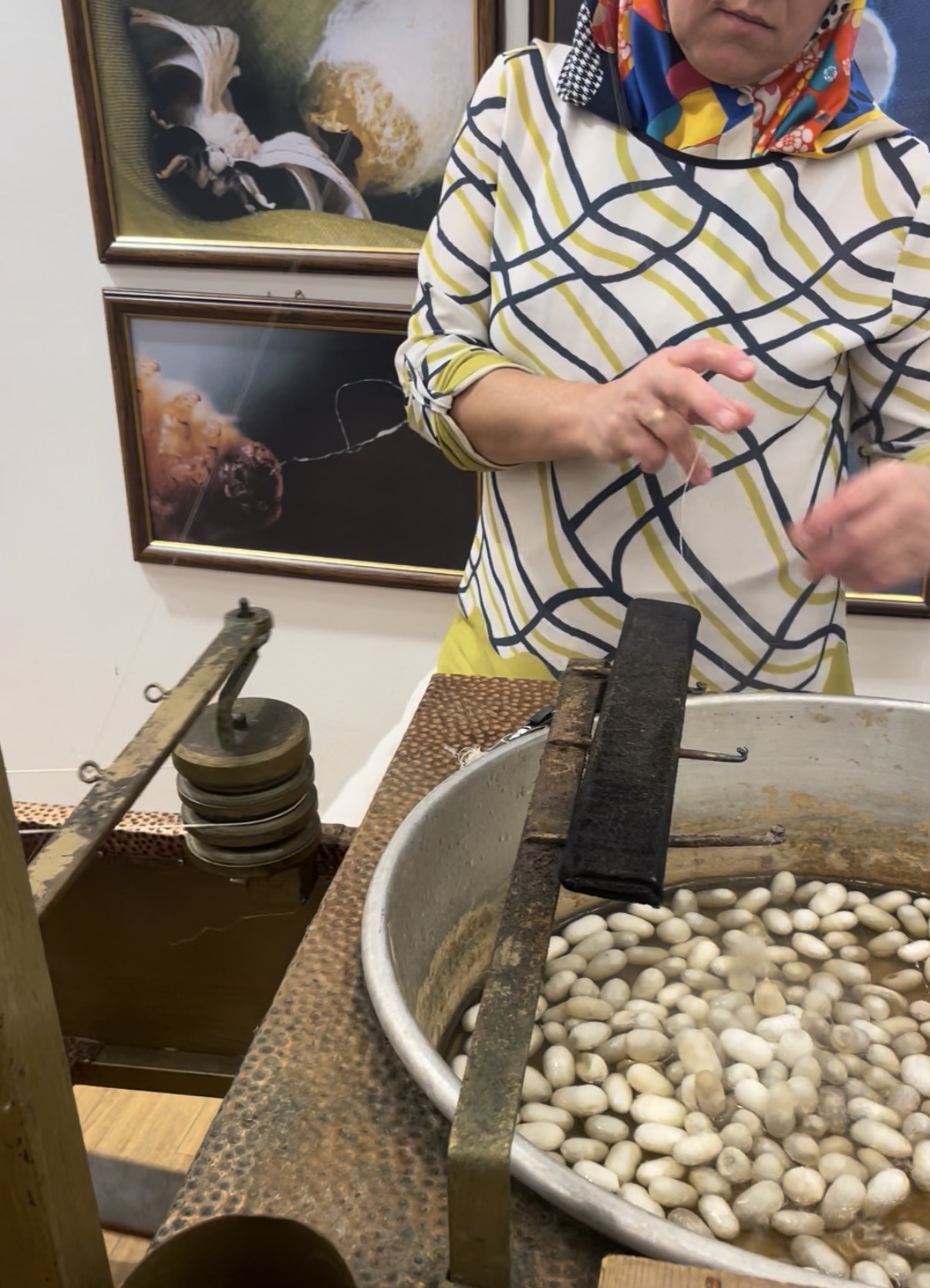
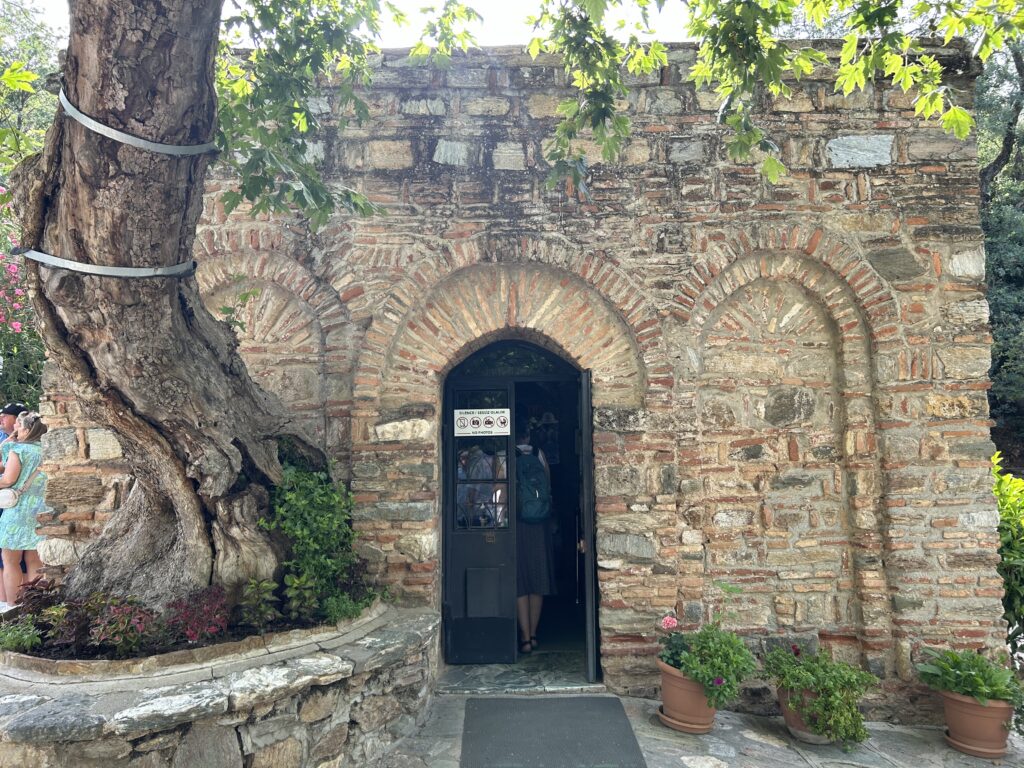
But before any of that, they showed us something I have not been able to stop thinking about. There was a woman demonstrating the traditional process of turning silkworm cocoons into thread. https://youtube.com/shorts/RpSboMQs2b0?si=NFPjsRluS_fOlHrD
This reflection is not about the history of silk production. A quick Google search yields hundreds of books, and that is probably just the tip of what has been written across the globe.
To provide brief learning for me…Silk production traces back roughly five thousand years to Neolithic China.[1] Farmers first learned to raise the silkworm Bombyx mori on mulberry leaves and then would unwind the fine filament from its cocoon. For centuries China guarded the process as a closely held secret. According to the sixth-century historian Procopius, it was not until around 550 AD that two monks, working on behalf of the Byzantine Emperor Justinian, smuggled silkworm eggs out of Asia hidden inside hollow bamboo canes.[2] This act opened the door to this textile tradition being shared across ancient civilizations. Whether or not that specific story is true, silk cultivation did spread west along the trade routes over the following centuries. The region around western Turkey, later famous for silk-weaving, became part of that silk tradition.
The technique the woman showed us that day was centuries old. She had cocoons soaking in a basin of hot water. Apparently, heat and moisture loosen the sericin. This is the natural gum that holds each cocoon’s filament together. This makes it possible to unwind.
I was shocked to learn that a single cocoon can unspool into one continuous filament hundreds of yards long. While long, the filament is far too fine and fragile to use on its own. So, she worked the ends of several cocoons at once, catching them together and then feeding them onto a wheel she turned with a foot pedal. They demonstrated that as the wheel spun, the individual filaments twisted around each other, merging into a single, much stronger thread. It is hard to believe that this combining of multiple filaments is the actual mechanism by which silk becomes strong enough to weave, and eventually strong enough to become a rug.
I stood there genuinely captivated, watching this ancient process happen right in front of me. I will not pretend to be any kind of expert in this craft that was refined across cultures and centuries. One demonstration in a shop definitely does not make me a historian of it. But, I did not need to be an expert to notice a critical lesson.
What a Single Thread Cannot Do Alone
Here is the thing about one silk filament…It is remarkably fine, almost invisible, and on its own it breaks easily. It is not the individual strand that makes a rug that can last generations. It is the twisting together, dozens, then hundreds, of filaments, wound around each other until they form something with real strength. A single thread, alone, will never become a strong, resilient fabric. It is the intertwining that makes it permanent.
Watching that woman work, I could not help but think about teams, about leadership, about the groups of people I have had the privilege of working alongside, leading, collaborating with, and coaching over the years.
A single person, however talented, however dedicated, is like one strand of silk. It may be fine, but fragile, and limited in what it can hold on its own. What makes a team strong is not any one person’s individual thread. It is the willingness of individuals to twist together around a shared purpose. This ability to combine their separate strengths into something with actual load-bearing strength is quite remarkable and absolutely necessary for high-performing teams and organizations.
That is the job of a leader, I think. It is not to be the strongest single thread, but to be the one who gathers the ends together and starts turning the wheel. To help a group of individuals become something unbreakable, not by making anyone less distinct, but by binding their strengths so tightly that the whole becomes far stronger than any one part.
The Rug and the Dog Who Loved It
As we left the shop that day, we did what a lot of travelers before us have done. We bought a rug.
Not the large, extravagant one that was well outside our budget, but a smaller entryway piece, small enough to justify, beautiful enough to be hard to resist.
Months later, back home, a DHL box arrived with the rug inside, just as beautiful as the day we purchased it in Kuşadasi. We set it down at our front door, the perfect welcome for anyone walking in.
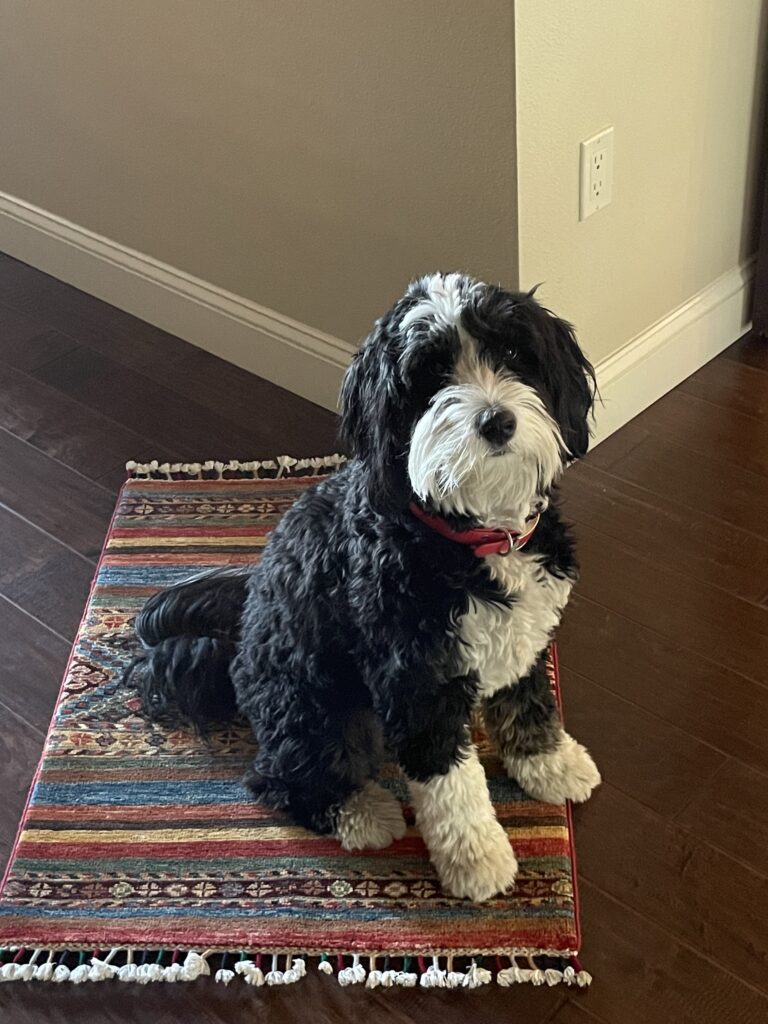
The next day, our dog Lottie decided to chew two very expensive threads clean off the corner of it. She loved that rug. It apparently tasted excellent. These days, in the interest of preservation, it lives a quieter life in our laundry room.
It is not the ending I imagined for a rug with that much history woven into it. But maybe that is fitting too. Even the strongest things we build, threads twisted a thousand times over, teams bound tightly around a shared purpose, need tending, protecting, and sometimes relocating to keep them intact. The craft does not end when the weaving does. Neither does the work of holding a team together.
[1] “Silk in Antiquity,” World History Encyclopedia, accessed October 2026, https://www.worldhistory.org/Silk/.
[2] Procopius, History of the Wars, c. mid-sixth century, quoted in “Legendary Silk Heists,” American Historical Association, accessed October 2026, https://www.historians.org/resource/legendary-silk-heists/.
Leave a Reply
Join the ED Nook List!
Sign up and get the latest blog posts, news, and more from ED Nook!
Contact Us
Reach out with any questions or requests for executive coaching or leadership consulting quotes here. We look forward to connecting with you!
Thanks! We received your message and will get in touch soon!

