

133 Days: What Behaviors Do You Want to Become Habits?
Aug 15, 2026
The Question at the Celebration
At a district’s back-to-school celebration last week, I overheard two colleagues greet each other the way people do in late summer. One said, “Wow, you look great. What have you been doing?” It made me wonder how much of our well-being is shaped by our daily habits.
The answer stuck with me. She said she’d finally started each day exercising, walking, spending time outside, prepping her food. She sounded lighter just describing it. Then she said the part that stayed with me longer:
“I’m so nervous that when I go back to school, all of this will go away. I don’t want to do that this year.”
I don’t think that fear is about willpower. I think it’s about what happens to good habits when the container that held them, in this case, summer, disappears.
A Better Question Than a Goal
At the start of a new school year, we often think about goals: What do we want to accomplish? What do we want to change? Where do we want to be by the end of the year?
But maybe there is a better question:
What behaviors do you want to practice so consistently that they become habits?
133 Nights in Hotel Rooms
A few years ago, I was serving as a Director of Schools, a role that required me to travel frequently to schools in Colorado, Texas, and Louisiana. I absolutely loved the work. There was something energizing about being in different schools, learning from different communities, and experiencing different educational environments.
At the end of that year, though, I realized something remarkable: I had spent 133 nights in hotel rooms.
I loved the work, but being away from home for more than a third of the year required intentionality. Early on, I made a commitment to myself: travel would not become an excuse to abandon the things that mattered most to me.
The Checklist on the Mirror
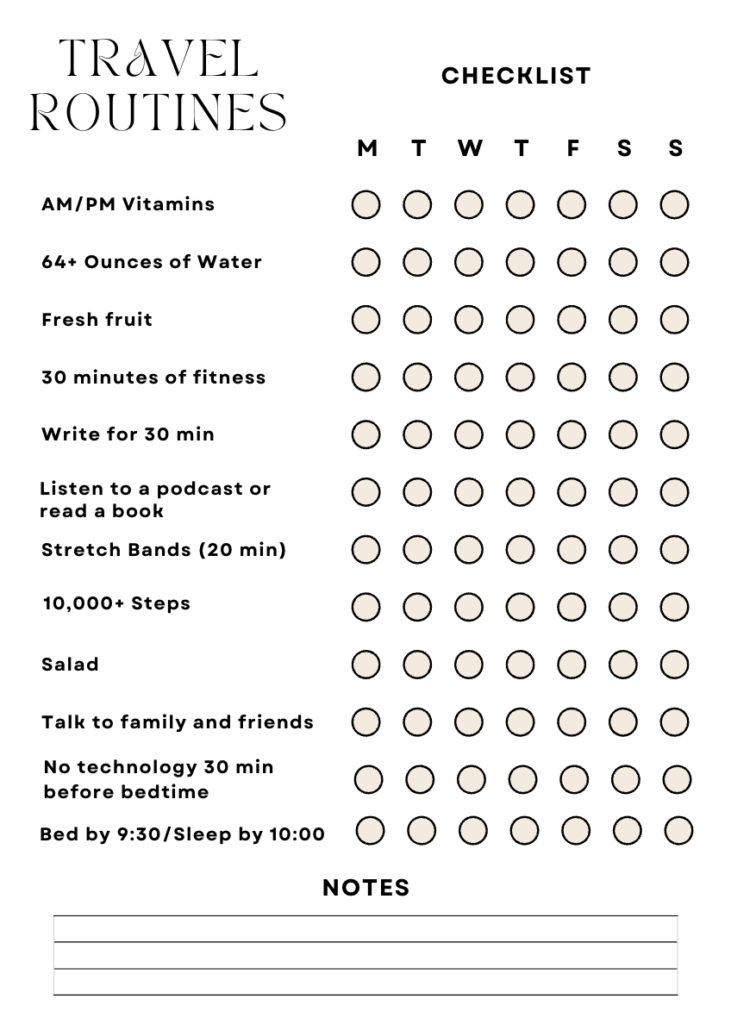
So, I created a checklist.
It wasn’t complicated. It included the behaviors I wanted to prioritize each day… movement, healthy food, reflection, reading, staying connected to the people I loved, and other practices that helped me feel grounded.
Before each trip, I would print the checklist, pack it in my suitcase, and tape it to the bathroom mirror in my hotel room. Each day, I checked off the practices I completed.
It had to be paper. There is something about the texture of the page, the feel of a pen moving across it, the physical act of checking a circle, that a phone reminder just doesn’t replicate.
There was nothing punitive about it. In fact, it was quite the opposite. It was a visible reminder of what I valued and what I did not want to lose sight of during that time of intense travel.
Over time, the behaviors that I did not want to stop doing while traveling became habits. Once something became so established that I no longer needed the reminder, I could add something new. The checklist evolved because I was evolving.
Notice…These were not about my professional commitments.
The Flowers That Never Made the List
And there were small routines that never made the checklist but became just as meaningful.
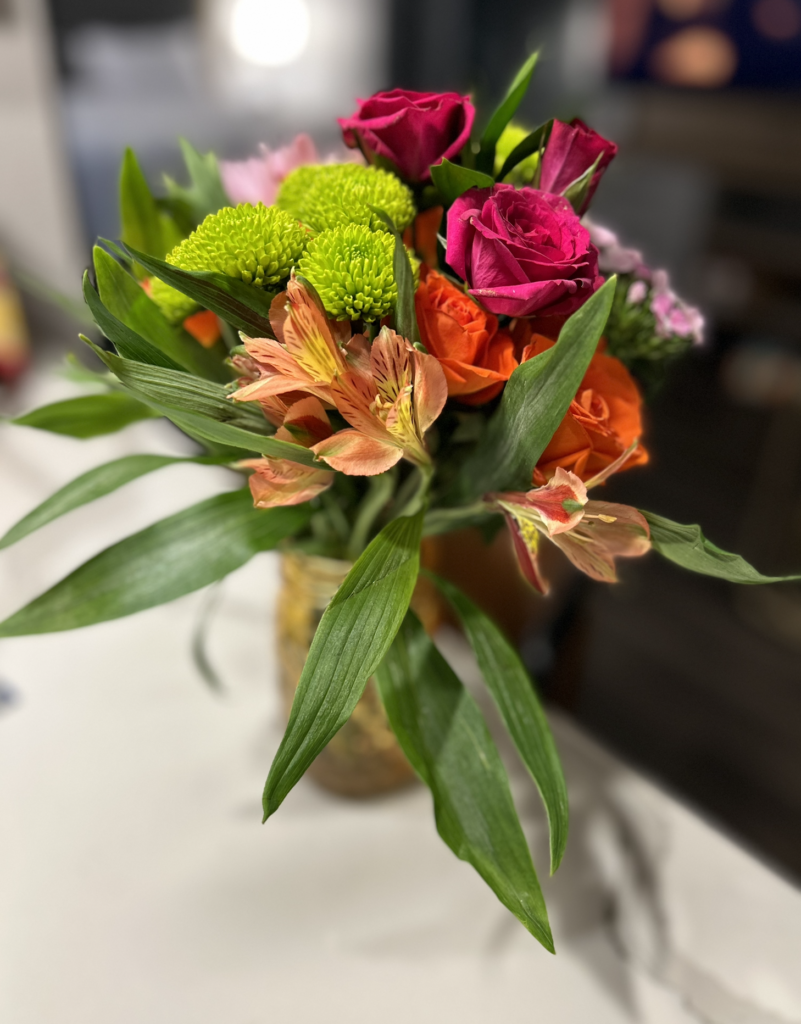
If I was going to be gone for more than a couple of nights, I would stop at a grocery store and buy a small bundle of flowers. I would cut them and put them in a hotel glass on the desk or counter.
It was such a small thing.
But those flowers reminded me that beauty, life, and joy don’t have to exist only in the places where we are most comfortable. We can create them wherever we are.
When the Container Disappears
That’s the same fear that the colleague named at the celebration. Summer feels bounded, a stretch of time with an obvious beginning and end, which is exactly what makes it safe to build new habits. The school year doesn’t offer that same edge. The beginning of a school year brings different schedules, longer days, unexpected challenges, and competing demands. And when life becomes busy or difficult, the things that matter most can sometimes be the first things we stop doing.
Ironically, those are often the things we need most.
Build Your Own Checklist
So, as you begin this school year, consider creating your own checklist.
What behaviors reflect the life and intentions you want to practice?
Maybe it is moving your body every day.
Maybe it is reading for 20 minutes.
Maybe it is leaving work at a reasonable hour.
Maybe it is eating lunch away from your computer.
Maybe it is taking five minutes to reflect at the end of the day.
Whatever you choose, make it visible. Practice it intentionally. Hold yourself accountable, not as punishment, but as a reminder that what you have decided matters to you.
Reflect and Celebrate
Then reflect. What is working? What gets in the way? What behavior has become so natural that you no longer need to track it? What are you ready to add?
And celebrate along the way.
Because eventually, the checklist becomes unnecessary. The behaviors become habits. And the habits become part of how you live.
I hope that the teacher makes her own checklist this year. I hope she tapes it somewhere she’ll see it every day. And I hope that a year from now, someone stops her at a celebration and asks the same question, and she gets to say she never stopped.
Leave a Reply
Join the ED Nook List!
Sign up and get the latest blog posts, news, and more from ED Nook!
Contact Us
Reach out with any questions or requests for executive coaching or leadership consulting quotes here. We look forward to connecting with you!
Thanks! We received your message and will get in touch soon!

